

Japan 🇯🇵
I'm in Japan on holiday. Family and Formula 1. Don't rob my house.
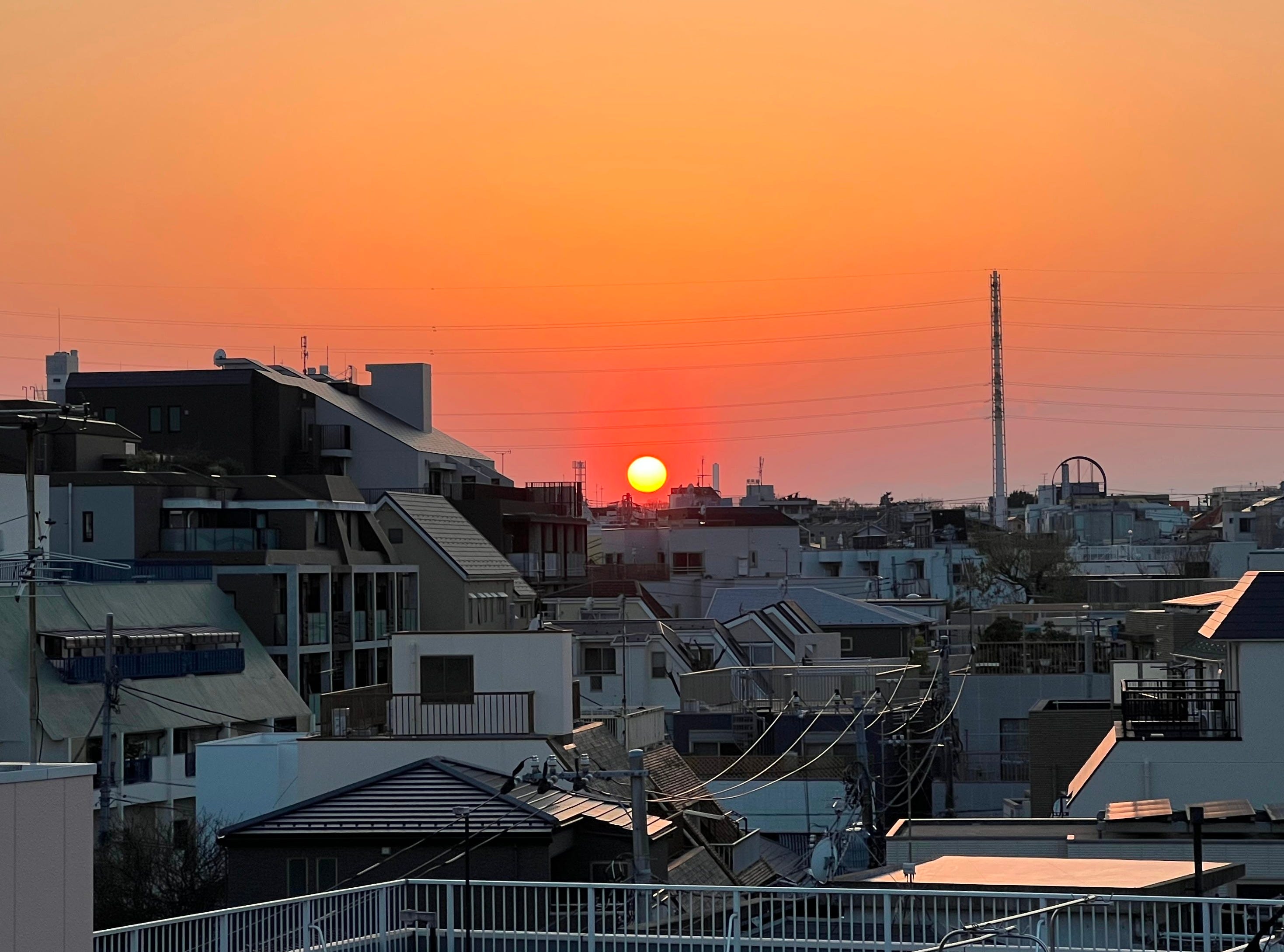
Taking a break from all things written and subscribed, a due break.
Here’s a repost from years ago on my life as a beloved, senior monk in a Japanese monastery.
*
I imagine myself passing away in a wood and bamboo room at a mountaintop monastery. I’m not sure how or when I get up there, but something significant will have to happen and fairly soon because the years are starting to click by now. Anyhow, it’s all very cinematic. Very Eastern.
In my ever so simple mountain monastery room, I leave behind nothing but a neat parcel of my belongings wrapped up in rice paper and scratchy brown twine. My monk’s robe is folded into a perfect square and placed in front of my empty teacup – a simple wooden teacup that I insist on cleaning myself even into my final hours. The teacup should be positioned exactly in front of the little square futon where I once answered my visitors’ questions. You can put a flower, like an iris or something, across the top unless it looks too staged or bulky on the teacup.
Outside my window I’d like to see the ancient Kirosawa Cherry Tree, grief stripping its petals in an April breeze. A ten-year-old should be able to tell you that the tree “knows” I’m gone. Earlier in the good-bye film you’ll need a set-up scene of my character very patiently pruning that same tree at dawn, with tiny, dandruff-sized Bonsai snips accumulating around the foot of the wooden ladder. You can worry about the details on how all that comes about, but obviously, nobody else should ever be seen tending the monastery trees but me.
At the exact moment I depart, let the cherry tree shot roll for a bit. Park the camera on the tripod, pop a fresh roll of film on there, turn on the wind machine and point the lens at the cherry tree. Get yourself a cup of coffee. Don’t be afraid to push the “this is an awfully long shot” envelope. Very Japanese. It’s okay if the audience starts to wonder if maybe it is the last shot in the film. (Spoiler: It’s not.)
As far as music is concerned, I’m thinking simple, soft, background farm sounds like chickens clucking occasionally mixed in with extravagant bursts of women wailing from one of the sheds. Maybe some creaky hinges and doors opening and closing off-camera. That can be people scurrying about doing whatever people do when somebody’s died on a farm. But real quiet and subtle so you can still hear the crying. I don’t want some over-the-top violin soundtrack. It’s not John Williams who’s died. It’s a beloved old monk. I can’t afford to lose the Zen payoff of my entire life.
Then slowly begin to montage all that with the other monks in long, silent procession as they lose their deep reserves of calm and weep convulsively without moving their heads. In cutaway shots one of the senior monk’s hands should reach to brace itself against the stone stairwell. It should be clear from information in an earlier scene that something like this has never happened in the monastery before, definitely not to the head monk character anyway.
Don’t force it, but I’m thinking we might have been competitors somehow, but with me being the “not competitive” one who wins in the end. And now the head monk also knows and, of course, I tried to tell him both directly and through parable.
I’d also like a scene with pilgrims who came on foot some ridiculous distance to see me but arrived too late because then I was dead already. They should learn of my passing from the sandbox gardener. Don’t even let the gardener look up. He should inform the visitors over his shoulder and keep raking. Because everything that happens is perfect and for a reason. And this is perfect, too. It turns out that this was the message they came a thousand miles for and what they needed to hear: “you came too late to meet him.”
Only that. Nothing more:
“You’re too late. He’s gone. You wanted to meet him. You didn’t.”
Dut-dee-dut-dee-dut-dee-dut.
This, my friends, is What Life Wanted You to Know.
Ouch. I love it. Oh my god! It’s perfect. I’m getting enlightenment tingles. Look at my forearms!
For credibility it would be better if the visitors aren’t English speaking. Have them be Portuguese or something. I want humble, poor Mediterranean people who pick a religion and stick with it. Please don’t use Americans.
Then, in the very, very final shot, you should have a close-up on a long-stemmed ink brush faltering suddenly mid character or hieroglyph or whatever you call them. The Japanese should be translated in an italicized subtitle to let the audience know that the word was “Sorrow.” Consider spelling it wrong for authenticity.
If you had a know-it-all friend who studied Japanese in college, he would nudge you in the theater and whisper that none of the Western words for sorrow can even begin to get at what this word means in Japanese, but that “sorrow” is still the best translation without resorting to koan.
And then it’s over and I’m gone forever and guess what?
You didn’t get to meet me either.
I love it.
It’s perfect.
Enjoy your wholly deserved break Adam, I am imagining;
"At the exact moment I depart, let the cherry tree shot roll for a bit. Park the camera on the tripod, pop a fresh roll of film on there, turn on the wind machine and point the lens at the cherry tree."and the cherry blossom pics you could, but probably won't, take!